tattoos
Showing posts with label hybrid. Show all posts

Friday, May 20, 2011

2012 Porsche Panamera S Hybrid


I had been anticipating the pre-dawn run to the airport for a few days. Having spent the week with a Porsche  Panamera .Turbo, complete with the torque-boosting Sport Chrono pack (yes, that one), the blast to SFO was a fitting sendoff. It was also perfectly timed.

I was boarding a marathon flight to Austria for the global launch of the and after seven dayPanamera S Hybrids, with the Turbo, I was smitten. And concerned.

While the 500 horsepower and 568 pound-feet of torque from the boosted V8 proved the old adage about absolute power corrupting absolutely, it was the completeness of the Panamera package that left me slack-jawed. When the Stuttgart brain-trust puts its mind to something, they do it right. Look no further than half a century of rear-engined evolution and the much-maligned, but incredibly capable Cayenne. Now add the Panamera to that list. Its sheetmetal might not suit your tastes, but Porsche  managed to create the best driving luxury sedan on the market. But a hybrid? They'd better not screw this up.


 Porsche is calling this the world's fastest production hybrid and the most economical Porker of all time. With a 0-60 mph time of 5.7 seconds and a top speed of 168 mph, Porsche nailed the numbers for quick and fast. But with a starting price of $95,000, the "economical" claim is tough to swallow. However, based purely on fuel consumption, Porsche's PR people have a point. The automaker pegs consumption at 6.8 liters/100 km on the Euro cycle (down from 10.3 for the S' 4.8-liter V8). U.S. EPA figures haven't been released yet, but figuring the Cayenne Hybrid  – equipped with the same drivetrain and coming in some 600 pounds heavier – manages 20/24 mpg, a combined figure in the high 20s should be easily within reach.
So what about that drivetrain? It's a variation of the setup fitted to the aforementioned Cayenne and its  Volkswagen sibling, the It starts with Touareg Hybrid  VAG's supercharged 3.0-liter V6, outputting the same 333 horsepower you'd get in the Audi S4.  Sandwiched between the V6 and the eight-speed Tiptronic S automatic transmission is a 34kW (47-hp) electric motor that brings overall output up to 380 hp and makes this Panamera the world's first full parallel hybrid luxury sedan. The engine alone produces 325 lb-ft, but with the 221 lb-ft of torque created by the electric motor, maximum twist comes in at a claimed 428 lb-ft. The torque curves of the engine and motor meld seamlessly, with peak torque from the electric motor beginning at 1,150 rpm and bleeding off just as the ICE's supercharged torque kicks in to provide uninterrupted shove from 3,300 to 5,250 revs (redline stands at just over 6,500 rpm).

The combined effect is instant-on passing power at the drop of the throttle; not nearly as much horizon-come-hither thrust as the Turbo, but noticeably more than the V8-powered Panamera S, with it's comparatively paltry 369 lb-ft.


So yes, it's quick. And yes, it's smooth. And the eight-speed transmission is quicker and more refined than nearly anything else out of Germany or Japan. But to win on the technology and fuel economy front, the Panamera S Hybrid has to do more than just be another quick Porsche. And that's where it succeeds and surprises.

As you'd expect from any modern hybrid, the Panamera allows you to motor along under electric power as soon as you twist the key. Porsche claims you can hit speeds up to 52.8 mph in "favorable driving conditions" without ever tapping into the V6. However, even the lightest feather-foot would be lucky to max out at 15 or 20 mph before the internal combustion engine kicks in to provide additional motivation.


Try as we might, we could never get over 25 mph without having the V6 turn over, even after pressing the E-Power button to modify the throttle mapping, and we suspect that even in the mythical ideal conditions, the average driver will never get past 30 mph without gasoline assistance. But what's more impressive is the Panamera's engine shut-off at "sailing speeds." By easing off the throttle – up to a maximum of 103 mph – the V6 shuts down and the tach drops into the "Ready" mode. The transition is utterly and completely seamless (we could barely hear the engine at part throttle to begin with), and there's nary an ounce of lag or drivetrain shutter as the V6 restarts. It's easily the most fluid, refined changeover we've experienced in a gasoline-electric vehicle.

The cost of all this tech – beyond the $5,000 premium over the V8 S, marginally mitigated by additional standard features, including adaptive air suspension – is weight. The air-cooled, 288-volt nickel-metal hydride battery mounted low in the trunk only weighs in at 160 pounds, and marginally reduces trunk capacity by 110 liters, but overall weight is up over the S by nearly 400 pounds. Despite this, and thanks to an admirable 51:49 weight distribution in the only drivetrain configuration available (rear-wheel drive), the Hybrid drives as well as its conventionally powered siblings.


The electrically-assisted, speed-sensitive steering takes the prize for directness and communication, while the brakes, which come on abruptly during the first 1/4 inch of travel, smooth out to provide linear, fade-free deceleration with the slightest hint of regen. Eighteen-inch wheels with 245/50 R18 rubber in front and 275/45 R18 rollers in the rear come as standard, but the 19-inch wheels on our tester (equipped with 255/45 R19 front, 285/40 R19 rear Pilot Sport A/S Plus tires) still looked undersized when nestled into the cavernous wheel arches. And we'll be the first to admit that the "hybrid" badging on the doors looks as ostentatious as the tacked-on afterthought they are (10 minutes with a hair dryer and some dental floss should rectify that).

While cost-conscious Europeans might be more inclined to opt for the, forthcoming diesel Panamera the Hybrid S has a sort of twisted, techie appeal that we can't seem to get over. It might be slightly compromised over its V6 and V8 brethren, but the overall demeanor and driving experience comes through as pure Porsche: highly involved, remarkably well executed and drawing a bead on evolving the hybrid equation into more than just a lackluster, fuel-sipping conveyance for the environmentally conscious. It's not just a worthwhile addition to the Panamera family, it's a legitimate alternative for V8-averse luxury buyers. And knowing Porsche, it's obvious I shouldn't have worried.

Saturday, May 7, 2011

2011 Lexus CT200H Hybrid


The 2011 CT Hybrid is a 4-door, 5-passenger wagon, available in two trims, the 200h and the 200h Premium.

Upon introduction, both trims are equipped with a standard 1.8-liter, I4, 134-horsepower, hybrid engine that achieves 43-mpg in the city and 40-mpg on the highway. A variable speed automatic transmission with overdrive is standard.

The 2011 CT Hybrid is all-new for 2011. 

Lexus ballyhoos CT's base price, which by Lexus standards is, indeed, low. But if you want your new CT equipped to Lexus standards, plan to spend a little more.
Offered in base and Premium trim, the base CT has all the safety stuff (eight air bags, traction and stability control, brake override and more) and a few perks (heated mirrors, tilt/telescope wheel, power driver's seat, keyless entry/start, dual-zone climate, Bluetooth, six-speaker CD with satellite radio), but it also has vinyl seats and no sunroof. And you can't gussy it up much, unless you consider Premium Floor Mats a big upgrade, because there are no factory options to speak of on the base car.
To get access to those, you've got to go to the $31,775 Premium model, which adds heated front seats and a sunroof.
That's what we drove, but ours was loaded with options: boffo 10-speaker audio, leather, navigation, back-up camera, Lexus Enform personal assistance service and more. And that explains why our car cost 22 percent more than the $29,995 base price we were enthused about.
But, hey, it was equipped like a Lexus.
It is, however, powered like a Toyota.
Under its skin, CT 200h is a Prius, sharing Prius's basic platform and its hybrid hardware: CVT automatic transmission, 1.8-liter gas I-4, nickel-metal hydride battery pack and electric motor. Like Prius, CT's total system horsepower is a modest 134.
On the road, it's the slick suspension and quick steering that please — certainly not CT's straight-line acceleration, which is about 10 seconds from zero-to-60.
Anyway, it's fuel economy where CT really shines, earning EPA ratings of 43 city/40 hwy — wildly impressive by luxury-car standards, though lower than Prius's 51/48. For that, blame CT's slightly heavier curb weight, its slightly less-aero body and its stickier, more-aggressive tires, which contribute to the nice handling manners.
Drivers have the option of four drive modes: EV (pure electric; low-speed/short-distance); Eco (maximum mpg); Normal; and Sport (better throttle response).
In just under 300 miles of mixed city/hwy driving, we registered 43 mpg.
Room is fine front, OK in back, where head room is good but leg room is close.
Worth noting: the marvelous mouse-like controller for the car's various systems. Located on the center console, it falls easily to hand and, if you've used a computer mouse, it's utterly intuitive.
Go easy on options and — if you're not in a hurry — CT 200h is a fine, affordable and frugal gateway into the Lexus family.
Fifth hybrid model in the Lexus lineup a 1.8-liter gasoline engine that works with an electric motor, battery and generator. The system has a total power of 134 hp (100 kW) and is for 2011 Lexus CT-200h Hybrid to accelerate 0-60 mph [96 km / h] in 9.8 seconds. The manufacturer claims that the hybrid model EPA-estimated value of 43 mpg city and 40 mpg on the highway, using regular 87-octane gasoline.
Standard on all 2011 Lexus CT-200h Hybrid Includes smart access with pushbutton start / stop and touch sensors on the outside of the front door handles, leather steering wheel, six speaker audio system with CD player and Bluetooth, integrated satellite radio (with complimentary 90-day trial), USB / iPod connectivity, 17-inch alloy wheels and dual zone automatic air conditioning. Hybrid is also equipped with a standard eight airbags supplementary restraint.
2011 Lexus CT-200h Hybrid Optional features will be sixth-generation navigation system with rearview camera, moonroof, heated seats and premium sound package that the Lexus Premium Sound system with 10 speakers and six-CD changer, Homelink, and electro-chrome rear view mirror with compass underwater covers.


Tuesday, May 3, 2011

2011 Lincoln MKZ Hybrid


2011 Lincoln MKZ Hybrid

The Lincoln MKZ, initially named the Lincoln Zephyr, is a mid-size, entry-level luxury car from the Lincoln division of the Ford Motor Company. Lincoln revived the Zephyr name in the fall of 2005 as a platform-mate for the Ford Fusion and Mercury Milan; the vehicles were based on the CD3 platform, which was derived from the Mazda 6. The Zephyr's sole powertrain was a 3.0 L DOHC Duratec V6 mated to an Aisin 6-speed automatic transmission; identical to the V6 powertrain that was optional in the Fusion and Milan. Visually, the Zephyr could be easily distinguished from its Ford and Mercury siblings thanks to unique fascias and other stylistic elements, but as much as 35% of its body panels were shared with the other cars. However, the interior is entirely unique to the Lincoln, and this, along with different equipment packaging, helped differentiate the brands. Reflecting its entry-level luxury position, the 2006 Zephyr started at a base MSRP of $29,995 USD, ranging up to $35,575 USD when fully optioned.
Though slightly smaller and natively front-wheel drive, the Zephyr was marketed as a replacement for Lincoln's previous entry level mid-size, the rear-wheel drive, V8-equipped Lincoln LS. To facilitate a smooth transition, the Zephyr and LS were sold parallel to each other during the 2006 model year, the first model year of the Zephyr and the last for the LS. Ironically the Zephyr's first model year was also its last, in name. For 2007 the car was renamed MKZ, and took over the LS' market with sales beginning in September 2006. Highlighting the MKZ for 2007, other than the new name, was a mild exterior refresh, optional all-wheel drive, and a larger displacement engine with more power. The MKZ name followed a new nomenclature used at Lincoln for new vehicles beginning in the 2007 model year (existing models such as the Navigator and Town Car have been unaffected thus far). Ford initially intended the "MK" to represent an abbreviation of its traditional "Mark" naming series, but has since abandoned that in favor of simply reading the letters. The MKZ was the first in this series of new "MK"-named Lincolns, and has since been followed by the MKX, MKT and MKS. For 2010 the MKZ was revised with new exterior and interior styling along with other new features.
The Lincoln MKZ (and the Zephyr before it) is built at Ford's Hermosillo, Sonora, Mexico, plant.
The 2006 Lincoln Zephyr was initially unveiled in concept form at the 2004 New York International Auto Show as a new entry-level luxury sedan intended to appeal to a younger generation of luxury car buyers. The car was based on Ford's CD3 platform which is shared by the Ford Fusion, Mercury Milan, and other vehicles. Many of the design elements of the Zephyr concept made their way into the production model, albeit with some revision. The front fascia of the Zephyr's exterior was adorned with Lincoln's signature waterfall grille and jeweled quad projector beam headlights (HID headlights were available). Chrome trim extends along the Zephyr's beltline while the car's rear fascia features wing-shaped LED taillights and dual chrome exhaust tips. All Zephyrs featured low-profile tires on 17x7.5-inch wheels with painted aluminum versions standard and chrome versions optional. In spite of unique styling relative to the Zephyr's siblings, the Fusion and Milan, a little over one-third of the car's body panels are shared.
Inside the Zephyr was an interior design that was thoroughly distinctive relative to the Fusion or Milan, almost shadowing the 2005 to 2009 Ford Mustang. The upscale design featured rectangular shapes in the dashboard surfaces and door panels with real ebony or maple wood inserts (depending on desired trim) in metallic frames. These surfaces were contrasted with chrome-bezeled gauges, circular, chrome-finished vents and a metallic center stack where the radio and climate controls are housed. The Zephyr's steering wheel was leather-wrapped with real wood grips and satin-nickel audio, climate, and cruise control buttons. White LED backlighting was used for the Zephyr's controls and instrumentation. Leather seating surfaces were standard in all models.
In terms of luxury and convenience features there was little that distinguished the Zephyr from the Fusion or Milan. Most of the features that were optional in the Fusion or Milan were simply standard in the Zephyr. Some of these standard features in the Zephyr include: cruise control, automatic headlights, fog lights, power door locks, "global" power windows (all windows can lower simulataneously at the push of a button), power adjustable and heated mirrors with puddle lamps, remote keyless entry, a tilt and telescoping steering wheel with redundant audio and climate controls, dual-zone automatic climate control, a universal garage door opener, 10-way power driver and front passenger seats, rear-seat reading lamps, and a six-speaker audio system with an AM/FM stereo radio and a six-disc, MP3-compatible CD changer. Optional in the Zephyr was a power moonroof, a DVD-based satellite navigation system, HID headlights, heated and cooled front seats, and an industry-first THX II-Certified audio system with a six-disc, MP3-compatible CD changer and ten speakers. Safety features include standard dual front-side airbags, front seat-deployed side airbags, and curtain airbags that extend from the front to rear seats.

Monday, April 11, 2011

Toyota Sells 3 Millionth Hybrid


Toyota Sells 3 Millionth Hybrid
With global crises from Japan to the Middle East continuing to roil world oil markets, the need for automobiles that consume less energy has never been more acute. Some of the most exciting lab work is being done in the electric- and fuel cell-car arenas; but the inherent limitation of such cutting-edge propulsion technologies is that, at least initially, very few models are likely to make it on the road due to cost and scalability issues

Thursday, August 26, 2010

BMW 7 Series Liquid Hydrogen Hybrid


The BMW Hydrogen 7, as the hydrogen hybrid is called, is a fully operational and ready for production hybrid that runes on liquid nitrogen. Quoting the BMW website this is the first production ready hydrogen vehicle. The whole quote can be read below.

The future is closer than you think.

The BMW Hydrogen 7 is the world's first production-ready hydrogen vehicle. It's already proving itself in the real world too: we're putting 100 of them to the test as loan cars for leading figures from the worlds of culture, politics, business and the media, including Oscar-winning film director Florian Henckel von Donnersmarck and Erich Sixt, chairman of rental car company Sixt AG.
Real-world experience shows that switching to hydrogen can go hand in hand with the comfort, dynamics and safety you'd expect from a BMW.

This is a pretty bold move by the German manufacturer because they are going into uncharted territory, and boldly at that, with their flagship model, the 7 series. What is really impressive is that this car is able to delivery the same kind of luxury expected from BMW and the piece of mind that you are doing your part in not polluting the environment. Now what is different about this specific hybrid is that it uses an internal combustion engine to burn both regular gas and the liquid hydrogen. This might be convenient looking from the manufacturing point of view, but this type of engine, found in most modern cars, is very inefficient and when burning the liquid hydrogen it looses a lot of it. This type of engine would need much more liquid hydrogen to produce the same amount of energy that an engine designed specifically for liquid hydrogen burning would need. So while still not too practical the BMW hybrid is a reality and that is the first step necessary into tackling the problem of what is going to drive the cars of the future.


Now in the above picture you can see one of the people mentioned in the quote taken from the BMW website. This person is Oscar Winner Florian Henckel von Donnersmarck , he was one of the lucky once to get this baby for free, before its available to the public.

Saturday, November 28, 2009

Lexus LS Hybrid full review

Assembly Tahara, Aichi, Japan
Engine(s) 5.0 L 2UR-FSE V8
Transmission(s) 8–speed continuously variable transmission
Wheelbase SWB: 116.9 in (2969 mm)
LWB: 121.7 in (3091 mm)
Length SWB: 198 in (5029 mm)
LWB: 202.8 in (5151 mm)
Width 73.8 in (1875 mm)
Height 58.3 in (1481 mm)


Lexus LS Hybrid
Lexus LS Hybrid

Lexus LS Hybrid
Lexus LS Hybrid


Lexus LS Hybrid


Lexus LS Hybrid


Lexus LS Hybrid


Lexus LS Hybrid


Lexus LS Hybrid


Lexus LS Hybrid


Friday, October 2, 2009

Ford Fusion Hybrid 2010 Top Review and pics

Manufacturer Ford Motor Company
Production 2009–present
Assembly Hermosillo, Sonora, Mexico
Class Mid-size
Body style(s) 4-door sedan
Layout FF layout
Platform Ford CD3 platform
Engine(s) Gasoline:
I4 2.5 L /152 hp Atkinson cycle
Electric:
Permanent Magnet AC Synchronous Motor
106 hp @ 6,500 rpm, 275 volts
Transmission(s) CVT
Wheelbase 107.4 in (2728 mm)
Length 190.6 in (4841 mm)
Width 72.2 in (1834 mm)
Height 56.9 in (1445 mm)
Electric range 2 miles (3.2 km) on city driving using battery only (EV mode),[1] and 700 miles (1,126.5 km) when assisted by the on-board gasoline-powered engine (one full tank).[2][3]
It can operate in EV mode at speeds of up to 47 mph.
Ford Fusion Hybrid 2010

Tuesday, August 4, 2009

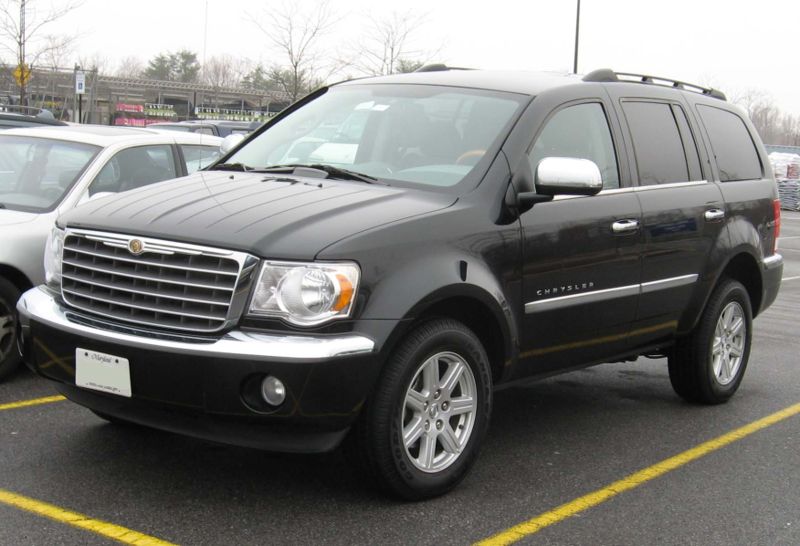
Chrysler Aspen 2009 Hybrid Nice Price

A hybrid version of the Aspen was introduced in 2009 . It has a 340 hp (254 kW) 5.7 L (345 cu in) Hemi engine with MDS and the new two-mode hybrid system developed with General Motors and BMW. Chrysler reports indicate a 25% gain in fuel economy on the road and a 40% gain in the city.


Chrysler Aspen 2009
Chrysler Aspen 2009
Chrysler Aspen 2009
Chrysler Aspen 2009

Chrysler announced that the 2009 Chrysler Aspen Hybrid should start an MSRP of $ 45.570.
Chrysler Aspen 2009
Chrysler Aspen 2009
Chrysler Aspen 2009
Chrysler Aspen 2009
Chrysler Aspen 2009
Chrysler Aspen 2009
 

blogger templates | Blogger