tattoos
Showing posts with label acura. Show all posts

Friday, September 2, 2011

2011 Acura TL


Vehicle Overview
Acura's best-selling sport sedan was overhauled for 2009, when it received new exterior styling, a base 280-horsepower, 3.5-liter V-6 engine and the addition of a Super-Handling All-Wheel Drive model with a 305-hp, 3.7-liter V-6. For 2010, the all-wheel-drive model got an optional six-speed manual transmission that is 86 pounds lighter than the standard five-speed automatic.
New for 2011
The TL carries over from 2010 without significant changes.
Exterior
The TL sedan's exterior was drastically redesigned for 2009, when it gained an aggressive, pronounced "beak" that juts out from under Acura's shield grille.
Exterior features include:
  • Unusual front and rear styling

  • 17-inch alloy wheels standard; 18- or 19-inch wheels available

  • Projector low-beam and halogen high-beam headlights

  • Front fog lamps

  • In-glass radio antenna

  • Dual exhaust finishers

Interior
The TL's interior received a face-lift for 2009, making it more upscale. Every TL model comes with a six-disc CD changer, USB connectivity and an MP3 jack. The Technology Package provides interior upgrades like keyless access; a full-color, voice-activated navigation system; and a 410-watt surround-sound audio system. The TL seats five.
Standard interior features include:
  • Leather-trimmed interior

  • 10-way power driver's seat, including power lumbar support

  • Dual-zone automatic climate control

  • Heated front seats

  • Steering-wheel buttons that operate audio, cruise control and voice recognition

Under the Hood
There's a choice of two engines, both of which come with a standard five-speed automatic transmission. A six-speed manual is optional for the 3.7-liter V-6 on the TL SH-AWD.
Mechanical features include:
  • 280-hp, 3.5-liter V-6 with 254 pounds-feet of torque

  • 305-hp, 3.7-liter V-6 with 275 pounds-feet of torque (TL SH-AWD)

  • EPA-estimated mileage of 18/26 mpg city/highway in base TL, 17/25 mpg in SH-AWD (auto or manual)

Safety
Standard safety features include:
  • Antilock brakes with electronic brake-force distribution and brake assist

  • Side-impact and side curtain airbags

  • Electronic stability system

  • Three-point seat belts in all positions

  • Active head restraints for front seats

Thursday, August 18, 2011

2010 Acura ZDX


The new Acura ZDX 2010 four-door sports coupe will arrive in showrooms this winter with its Acura dramatic style, exceptional performance and the latest technology. Acura ZDX bending segment offers stunning coupé style with the added benefit of a commanding presence and flexible utility. True to the prototype model made its debut at the 2009 New York International Auto in April, Acura ZDX production depends on the design emphasizes a key panoramic glass roof, hidden door handles on the back and flares bold defense.

"The Acura ZDX is like you've never seen before Acura," said Jeff Conrad, vice president of Acura sales. "It combines the best attributes of a coupe, a sedan and an SUV - all wrapped in a package beautifully carved -. Who will attract a completely new luxury brand Acura"
Designed, developed and produced entirely in North America, Acura Acura ZDX pioneer in many ways. The Acura ZDX is the first vehicle to bear the title from start to finish in the new Acura design studio dedicated to Torrance, California, with the exterior and interior designers to work closely throughout the process design. Be faithful to the original sketch from the designer of the Acura first wife, Michelle Christensen, Acura ZDX features sensuous curves, shoulders and very sculpted lines of force of character.

Wednesday, August 10, 2011

2012 Acura TL 6-Spd AT


Overview
Now in its fourth generation, the TL is Acura's sales leader and far away the brand's most important vehicle; this much can be concluded by simply examining the many configurations on offer. The TL can be had with either front-wheel drive or Super Handling All-Wheel Drive (SH-AWD), a choice of a 3.5- or 3.7-liter V-6 and one of two transmissions; a 5-speed automatic or 6-speed manual.The recently introduced 6-speed is optional on SH-AWD-equipped TLs that come standard with a 305-horsepower 3.7-liter V-6 - the most powerful Acura engine ever built. This TL SH-AWD 6MT, as it's rather inelegantly known, replaces the last generation TL Type S and is the sportiest TL in Acura history. At the other end of the lineup is the base model front driver, which receives the 280 horsepower 3.5-liter V-6 and lackluster five speed auto as standard equipment.Mainstream acceptance has been slow in coming for Acura's signature front grille, but behind this bright beak is a surprisingly capable and composed sports sedan that loves to run hard.

The Range

Bodystyle: Sedan
Engines: 3.5L, V-6 3.7L V-6
Transmissions: 5-speed automatic, 6-speed manual
Models: TL, TL SH-AWD, TL SH-AWD 6MT

What's New

TL was completely redesigned in 2009 so changes are at a minimum. The biggest news is the TL SH-AWD 6MT model which features an all-new close-ratio 6-speed manual and clutch, as well retuned front springs and dampers, unique electric power steering tuning, and a recalibrated SH-AWD system. Also added to the 6MT model are heavy duty front drive shafts, CV joints and front differential.

Exterior

Beyond the beak is a striking, well-proportioned sedan, with a futuristic edge like nothing else on the road. It is best viewed from behind, which is all the more reason to keep viewers back there.

Interior

The best view of the new 2011 TL might be from behind the wheel, where cool metallic tones, tight tolerances, and crisp, gauges create a high tech, if button driven, environment. The 6MT is definitely the driver's choice.

Performance & Handling

The TL's 3.7-llter V-6 is a free-revving gem that only reaches full potential with the 6-speed manual. Both automatic versions are deft handling sedans that cruise comfortably and reward spirited driving, but both sorely need the new 6-speed transmission found in the MDX and ZDX. SH-AWD works well, but will not be missed by slow drivers or Sunbelt dwellers.

Safety

Four airbags and active head restraints for the driver and front passenger come standard as do various braking aids and stability/traction control. All seating positions have three point belts, while outboard passengers have side curtain airbags.

EPA Fuel Economy

TL: 18 mpg city/26 mpg hwy
TL SH-AWD: 17 mpg city/25 mpg hwy
TL SH-AWD 6MT: 18 mpg city/26 mpg hwy

2012 Acura TL


The 2012 TL is a 4-door, 5-passenger luxury sedan, or luxury sports sedan, available in 7 trims, ranging from the 6-Spd AT to the 6-Spd AT SH-AWD w/ Advance Pkg.

Upon introduction, the 6-Spd AT is equipped with a standard 3.5-liter, V6, 280-horsepower engine that achieves 20-mpg in the city and 29-mpg on the highway. The 6-Spd AT SH-AWD w/ Advance Pkg is equipped with a standard 3.7-liter, V6, 305-horsepower engine that achieves 18-mpg in the city and 26-mpg on the highway. A 6-speed automatic transmission with overdrive is standard on both trims.

The 2012 TL is freshened for 2012. 

Here’s a mind game I sometimes like to play: imagine your car was destroyed by some horrible accident while you were away (e.g., Godzilla was in the neighborhood). To your good fortune, your insurance company gave you a sufficient settlement to buy a brand new version of whatever it was you were driving. Would you consequently buy that brand new car, or something else with the same money?


We’ve got a 2005 Acura TL, manual transmission + satnav, purchased new back in the day and currently with a modest 60K miles on the clock. It’s driven cross-country. It’s driven to the supermarket. It’s had parking lot abuse. It’s had toddler abuse. And it keeps on running. I had it in the shop recently for it’s “B2″ service (oil change, assorted air filters, and wipers: $230 — whee!) and to fix what turned out to be a busted power steering pump ($450 or thereabouts). Of note, the dealer gave me a chance to play my imagination game by loaning me a brand new 2012 Acura TL (automatic transmission, no satnav, no options at all). With one day of driving it around, here are my observations.

Several things have decidedly improved. The seats seem more comfortable and supportive, and the driver’s seat now includes a power lumbar bolster. The car suspension has radically improved (alternately, our 2005 TL’s has seriously degraded). On the cracked up, uneven streets around our house, the new TL is significantly more composed. You still feel the bumps, but you’re less worried that they’re going to destroy your car. It’s similarly better mannered on the freeway. This is a car you’d love to drive cross-country. Some of the smaller electronic gadgety bits have also improved. I’m happy to see a proper tire pressure monitoring system and an auxiliary music input for phones and whatnot. (I didn’t have time to see how well it does at integrating music from my Android phone via USB much less Bluetooth Audio, but the Bluetooth pairing process was painless enough and Bluetooth Audio (A2DP) is claimed to be supported, albeit with .
Like the 2005 Acura TL, several things are good, but still frustratingly not quite right. Freeway mileage is excellent and stop-and-go city mileage is an embarrassment; I clocked 31mpg highway and from 13-20mpg stop-and-go city — a marginal improvement on the freeway and a marginal downgrade in the city compared to what our 2005 TL gets.
The car has zillions of things you might like to configure, like what happens when you click the unlock button on your remote. Does it just unlock the driver door or the whole car? Many such settings are handled with the arrow buttons on the steering wheel and the tiny screen between the tach and speedo. That’s good. But, how about that giant selector knob with the huge screen above the center stack? It’s only good for changing the radio station and setting up the audio balance. Similarly, the Bluetooth pairing process can only be done via voice, which talks to you slowly. Very slowly. With modern in-car networks, you’d think they could do everything on the big central screen, making it easier, providing more help with options, etc.  Could they, should they centralize all these disparate systems, from no-doubt unrelated parts suppliers, to have a grand unified user interface? Could it be accomplished without reaching iDrive levels of incomprehensibility? For the 2005 TL, such thoughts would have been future fantastic. For the 2012 TL, such thoughts should be entirely achievable. Everything in the car is networked together. Make it so!

Frustratingly, several things have gotten decidedly worse. Foremost is the trunk. If you’re loading something heavy, you’ve now got a 10.5 inch lip to hoist your bags over, versus 7 inches in the 2005 TL. Why? Similarly, if you’re going to the airport, one giant wheely bag will fit without issue, but two of them? Good luck with those bumps on the floor. You can’t blame AWD, since this particular car is FWD. So, again, why? Also from the Department of Fail, you’d think they’d test a family car with family accoutrements like a booster seat. I’ve included a photo of my daughter’s booster seat. You’re supposed to run the seatbelt under both armrests. See the belt latch? It’s way around the back. The old TL was better in this regard, but stil not great. Why not have more slack in the belt latch? (Credit where credit is due: they significantly improved access to the LATCH anchors for younger kids’ car seats.)

Another concern is trying to park this thing into a tight space. The car’s beltlines are higher up and the car feels enormous. It’s notably trickier to park and maneuver in tight environs. Does anybody test these things? I’ll also insert a gripe about the ventilated seats (not present on my loaner car). If I read the options list correctly, it’s not possible to get a manual transmission and ventilated seats, at any price. Really? Do Acura engineers like sitting in a car with Godzilla barbecuing their backside? Do customers who want manual transmissions always wear Nomex racing suits? Hop in my car after a day outside in the Houston summer…

Cosmetically, I’m pretty happy with the new schnoz. It won’t win any beauty contests, but at least it doesn’t cry out for you to put it out of its misery. Also in the cosmetic department, they’ve redone the dashboard and center stack. The gauges are bright and readable, as always. Somebody smart said they should get rid of the blue halos around the old gauges. Somebody less smart decided to add giant fake-chrome rings around them, in a perhaps-confused nod at a Porsche 911. Please revisit the clean, spartan gauges of the previous-generation Acura TSX. No really, please do. Also, I’m baffled by the curvy/slashy lines inside the car. Has somebody been spending too much time looking at.

So, if Godzilla paid an unfortunate visit to my car and I hit the insurance jackpot, would I buy the new TL? Sadly no. But what? Does anybody make a car with a manual transmission, rear wheel drive, decent tech and luxury features, decent mileage yet good performance, good styling, and high reliability ratings? At any price at all? Yeah, fantasies never quite work out, do they?

Wednesday, July 27, 2011

Acura NSX

Elegant Orange Acura NSX
Luxury Blue Acura NSX
Blue Acura NSX Wallpaper
Red Acura NSX Concept
Duo Acura NSX
Silver Acura NSX Look so Cool
Yellow Acura NSX on The Road

Monday, July 25, 2011

Acura CL

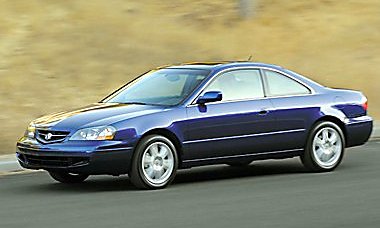
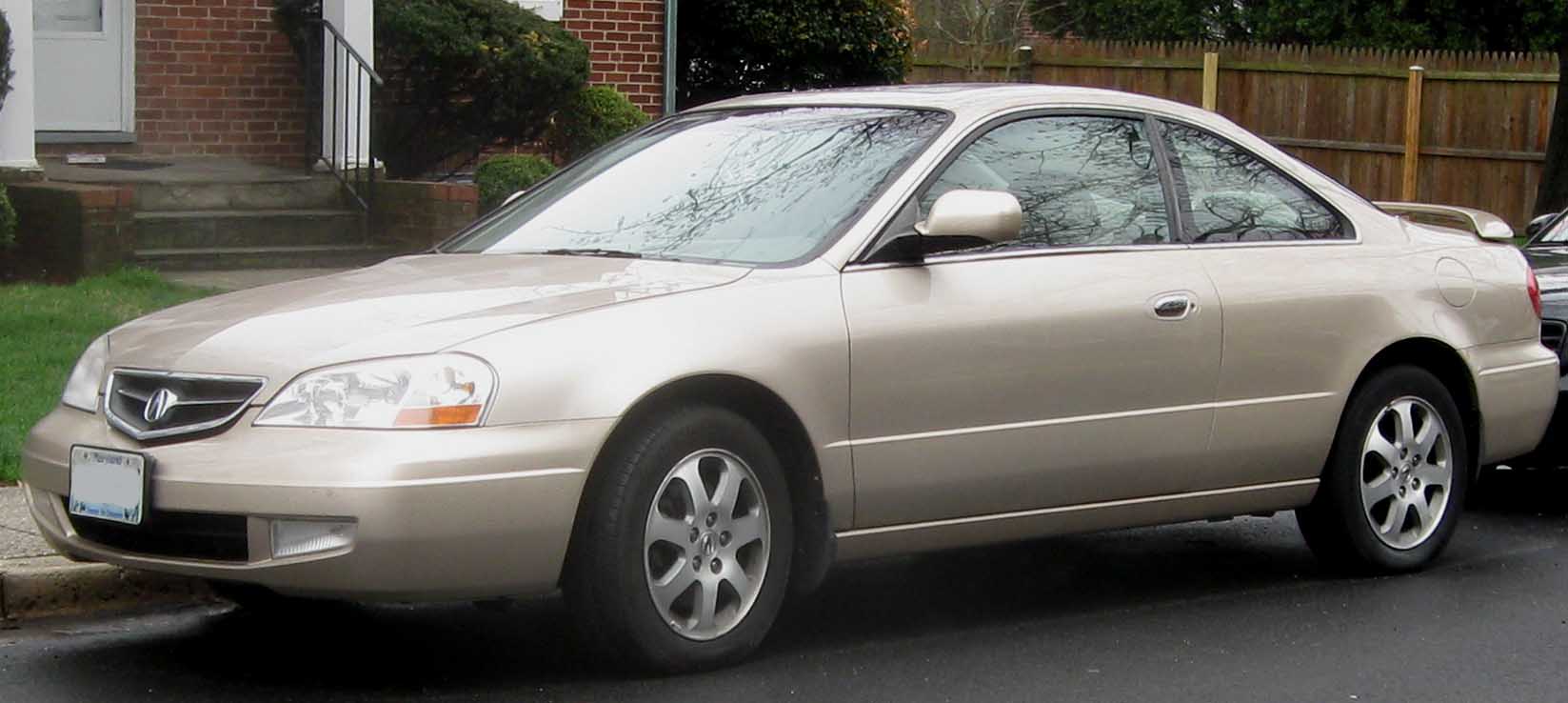
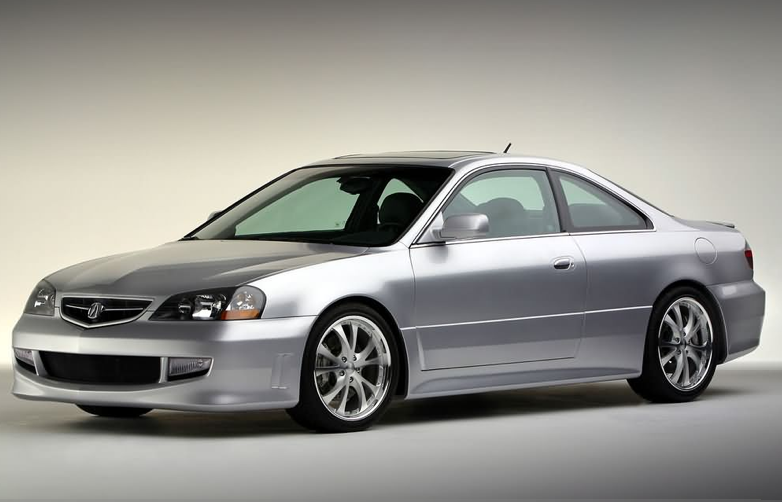
The Acura CL is a model of automobile manufactured by Honda's Acura brand from 1997–1999, and from 2001–2003. The CL is often thought to have been a replacement for the Acura Legend coupe. All Acura CLs were built at Honda's plant in Marysville, Ohio alongside the TL and the Honda Accord upon which the Acura CLs were based. The CL was the first Acura to be built in the United States.
White Acura CL Concept
Blue Acura CL on The Road
Silver Acura CL View Detail
Acura CL Interior
Elegant Silver Acura CL
Following the end of the 1995 model year, the Acura Legend coupe disappeared from Acura's lineup when the sedan version was renamed the Acura RL. The coupe was replaced by the Acura CL for the 1997 model year, following Acura's transition to alphanumeric naming of all of its vehicles (with the exception of the Integra, which was kept in production until the 2001 model year).

Friday, July 22, 2011

Acura Vigor

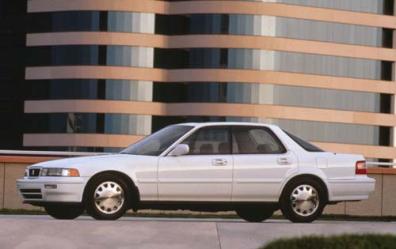
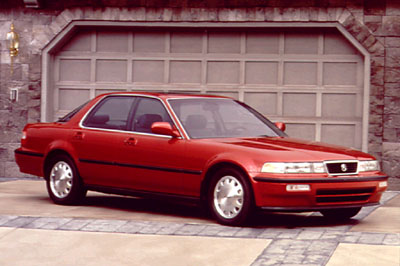
The Honda Vigor is Acura's mid-size sedan sold in Japan and the United States from 1981 to 1995, and was replaced by the Acura TL/Honda Saber. The Vigor started out in Japan only in the early 1980s as an upper trim level Accord. With later generations the Vigor moved upmarket and received a shared platform with the luxury oriented Honda Inspire: its engine now sat longitudinally as in the second generation Acura Legend. In Japan during the early 1990s, there were five sedans between the Civic and the Legend: the Honda Accord, Honda Ascot and Honda Integra with 4-cylinder engines mounted transversely, and the Vigor and Inspire with 5-cylinder engines mounted longitudinally. The Vigor was sold at Honda Verno dealerships in Japan, and the Honda Inspire was sold at Honda Clio dealerships.
Beginning September 25, 1981, Honda produced a variant of the Honda Accord badged as the Honda Vigor for Japan only. The first generation Vigor was a higher grade 4-door sedan and 3-door hatchback, with the 1.8 L engine as the only engine available. The Vigor was a sportier, faster, "vigorous" Accord with a higher level of equipment over the more sedate Accord. The Vigor competed with the Toyota Chaser and the Nissan Laurel in Japan. This engine debuted the SOHC 3 valve per cylinder mated to a 5 speed manual or 4 speed automatic transmission with a lock up torque converter. Items that were optional on the Accord, such as cruise control, power windows, and power steering were standard on the Vigor. A trip computer that displayed mileage, driving time, and fuel economy was also standard on the Vigor.
June 4, 1985 saw the introduction of the redesigned Vigor as a 4-door sedan only. As before, the Vigor was an uplevel Accord. The 1.8 L B18A engine was now offered with dual carburetors and a larger 2.0 L B20A engine was offered Honda's PGM-FI, with the 1.8 L A18A engine as the basic offering. The Vigor had minor cosmetic differences from the Accord, using a different front grille and rear tail lights, as well as a higher specification. May 1987 saw the introduction of the 2.0 Si Exclusive, adding electric retractable side view mirrors as standard. A automatic shift-lock system was added September 1988 on the "MXL Super Stage" trim level.
At the launch of the fourth generation Accord, the Vigor was no longer based on the Accord chassis. The third generation Vigor, sold in Japan at Honda Verno dealerships, was shared with the all new Honda Inspire and the new second generation Honda Legend, sold at Honda Clio dealerships. The Vigor was sold in the United States and was badged as the first generation Acura Vigor in 1992. The Honda Inspire was not yet introduced to the USA until the next generation was introduced in 1995, and sold as the Acura 3.2 TL, with the Vigor sold as the Acura 2.5 TL. In Japan, the Vigor competed against the Toyota Chaser.
Production began in 1991 and the vehicle went on sale as a 1992 model in June of that year, slotting between the Integra and the Legend.
Honda's 2.5 L longitudinally mounted 5-cylinder petrol was the only engine available. The transmission is attached to the bottom of the engine, which allowed the powertrain to remain slightly behind the front wheels. This also gave the car a near perfect 50/50 front to rear weight distribution.
Honda, Acura's parent company, anticipated that the market would move toward small, well-equipped sports sedans akin to the BMW 3-Series and that a less expensive but well equipped alternative to the BMW would be a strong seller; the Vigor was the result of that thinking. They were wrong, and early reviews of the Vigor were not favorable. Comparisons to the Lexus ES 300, which was roomier and softer in ride, generally favored the Lexus as the more appealing buy for the average luxury car buyer, whereas the Vigor was stiff and small.
In response to the reviews, Acura made several changes to the Vigor for the 1994 model year, increasing rear seat room, softening the suspension and re-engineering the steering rack to help isolate the driver from road imperfections in an attempt to make the model more like the ES. The tactics were unsuccessful; buyers favored the more powerful Legend as a sports sedan and still seemed to prefer the ES as an entry-level luxury model.
Poor sales and no improvement in market response led Honda to drop the model, and production ended on May 13, 1994. The Vigor was replaced by the 1996 Acura TL/Honda Saber.

Acura Legend

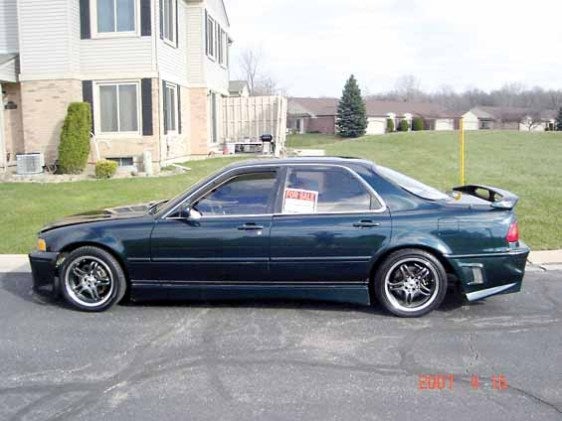
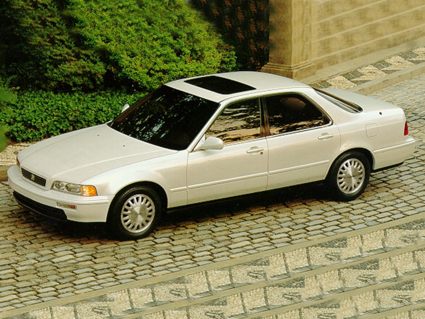
The Acura Legend, sold as the Honda Legend outside the U.S., Canada, and parts of China, was a luxury vehicle sold from 1986 to 1995 as both a sedan and coupe. It was the first flagship sedan sold under the Acura nameplate, until being renamed in 1996 as the Acura 3.5RL. The 3.5RL was North American version of the (KA9) series Honda Legend. In Japan, the Legend was only offered at Honda Clio dealerships.
The opportunity for Japanese manufacturers to export more expensive models had arisen with the 1980s voluntary export restraints, negotiated by the Japanese government and U.S. trade representatives, restricting mainstream car sales.When the Legend made its appearance into the market, rival companies in Europe, Japan and North America took notice, and quickly introduced or revised current products that could be compared to it. Toyota began development in 1983 with the F1 project, the code name for a secret flagship sedan effort that became the Lexus LS, Nissan updated their premium flagship the President initially introduced in 1966, and in 1988 Lincoln took a new approach to the venerable Continental offering for the first time a front wheel drive sedan with a V6 engine. General Motors introduced the GM H platform (FWD) and GM C platform with FWD, Audi took a fresh approach to the 100 and in 1994 introduced the A6, and BMW introduced the BMW 5 Series (E34) in 1988.
Honda introduced the model in Japan on October 22, 1985 to be their premier luxury model and in North America in 1986 as the top of the line model for its then-new Acura lineup. Sedan models came to the market first, powered by a 151 hp (113 kW) 2.5 L C25A V6, with coupes making their first appearance in 1987, powered by a new 161 hp (120 kW) 2.7 L C27A engine. Sedans received the new engine for 1988.
The Legend was the first production Honda vehicle to offer only a SOHC V6 engine worldwide. The Legend was a result of a joint venture with Britain's Austin Rover Group called Project XX that started in November 1981 with the Austin Rover-Honda XX letter of intent signed by the two companies to replace the Rover SD1 and to provide a luxury vehicle for Honda. The Rover Company had a long established reputation as a luxury car in the United Kingdom and Europe, demonstrated with the Rover P6, and Honda wanted to introduce a luxury car for both domestic Japanese and the United States markets. The joint development produced the Legend and the corresponding British version was the Rover 800-series, of which only the top of the range version - the Sterling - was sold in the United States in competition with the Legend.
In 1989, the sedan received some minor tweaks, upgrading to the one-piece front headlamps already in use in Japan since the 1986 introduction, a revised front bumper, trunk lid, tail light cluster, and an upgraded double-wishbone rear suspension, with a new alloy wheel appearance. By that time all Legends came equipped with a driver airbag and 4-wheel anti-lock brakes. Other features such as power driver's seat memory for 3 positions were added. High-end LS models featured a trip computer and electronic vehicle monitoring system in the center console and a Bose sound system. It was also joined by the Acura Vigor which set the stage for the larger second generation Legend introduced October 1991.
Second generation units became available October 24, 1990, now using a 200 hp (150 kW) SOHC (C32A) engine mated to either a standard 5-speed manual or an optional 4-speed automatic. The second generation Legend was a larger, more streamlined-looking car (drag coefficients were actually higher at 0.34 for sedans and 0.32 for coupes). The Legend offered a host of features seen on luxury cars of today including speed-sensitive steering, hands-free telephone, automatic climate control, heated leather seats, heated mirrors, 4-wheel ABS disc brakes, seat belt pretensioners and soft-close vacuum-operated doors (coupes only). The rear end appearance of the sedan was adopted from the first generation Legend coupe, as the first generation sedans appearance was very similar to the first generation Subaru Legacy, and Honda also wanted to visually align the appearance of both the Legend coupe and sedan to the Acura NSX. The segment the Legend originally filled was now being served by the Acura Vigor which allowed the Legend to position itself more towards the rear drive Lexus LS and the Infiniti Q45 sedans. Honda decided not to upgrade the size of the engine to a V8 because it would have upstaged the Acura NSX which has a V6 that introduced Honda's VTEC technology.
In 1994, all Legends received new front bumpers, a new front grille (L & LS Sedans only), revised trunk lids, and a power tilt-telescoping steering column; the word "Legend" was now spelled out in individual letters on the back. The base sedan, 4DR STD transmission, was dropped, while a new GS sedan became the new top-line variant, sporting the 230 hp (172 kW) Type II engine, upgraded brakes from the coupe, sport suspension from the coupe, a body colored version of the 1991 to 1993 grille, the same standard 6-speed manual found on the coupes as well as the special 16" 5-spoke LS Coupe wheels (better known as GS Wheels). Also in 1994, the LS version of the sedan lost the standard manual transmission. It was only available with an automatic transmission.
The Japan Domestic Market version of the 1990 Legend (second generation) was the first vehicle offered with a 260 hp (194 kW) engine and navigation system, although it was not satellite-based and instead relied on a gas gyroscope. The tooling and intellectual property rights of the second generation Legend were licensed to Daewoo Motors of South Korea, where a clone of the Legend sedan, called the Daewoo Arcadia, was produced from 1993 to 2000. During this period, Honda also held a small stake in Daewoo Motors.
The replacement for the Legend sedan is sold as the Acura RL in North America, although Honda continues to sell it as the Legend in most other areas of the world.

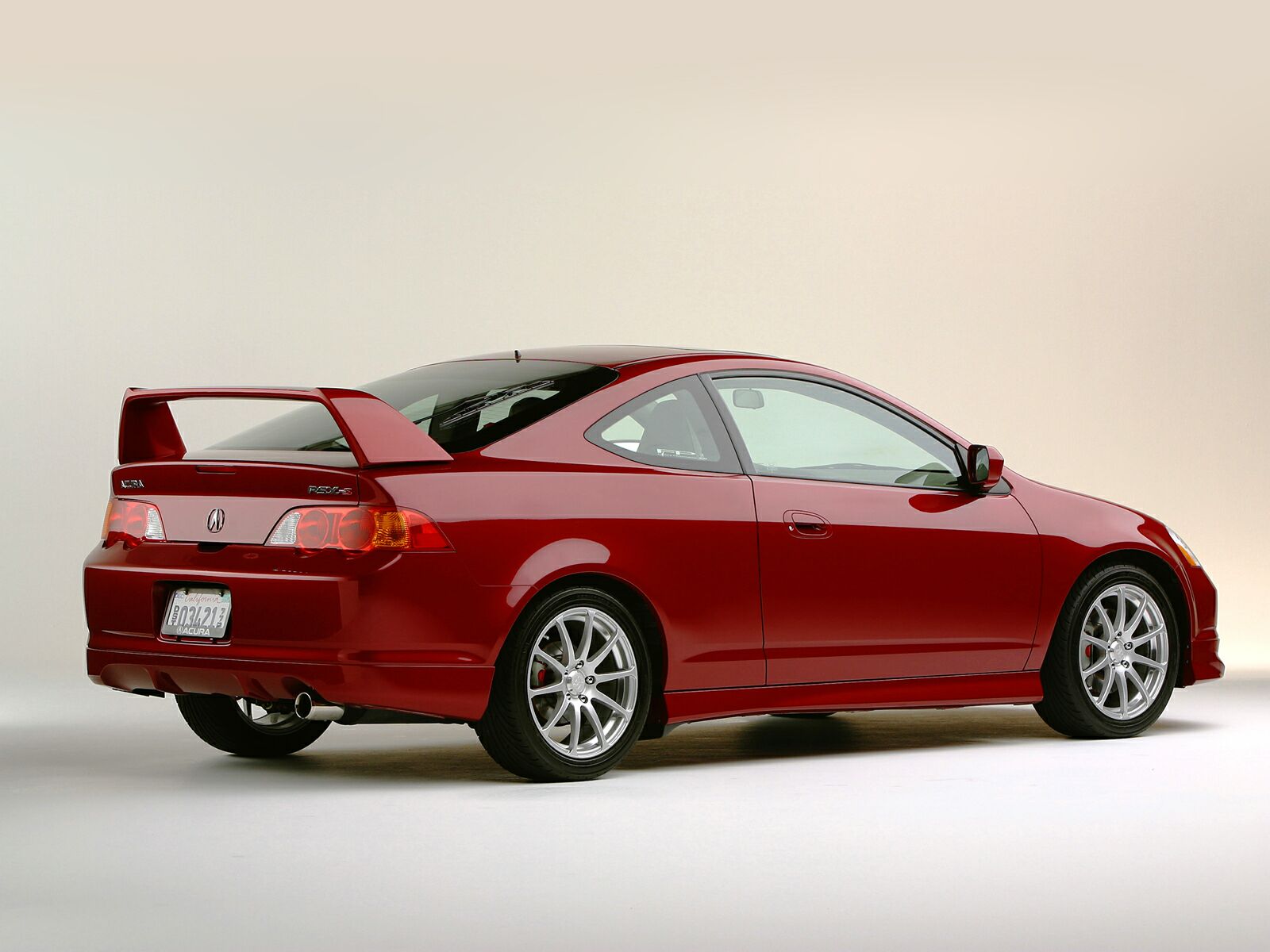
Acura RSX

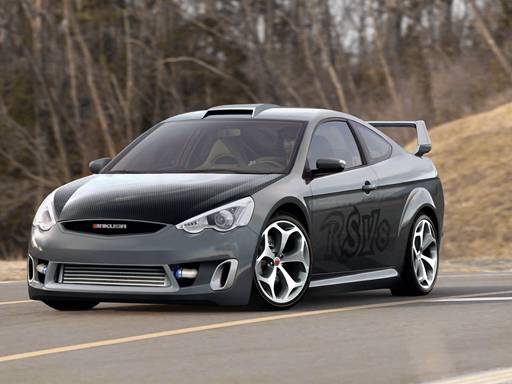
The RSX is somewhat familiar as a redesigned Integra. The current version has either a 160 or a 200 hp four-cylinder power plant, with the latter coming standard in the Type S. The more powerful engine makes its horses partly through an advanced valve timing technology, which shifts into high performance mode at 6,000 rpm. The result is a kick in the pants similar to that of a turbocharger suddenly spooling up.
The good news is that the RSX has superb handling and strong acceleration, especially if you are already running the engine fast, but it is easier to shift and to manage than many other sports cars. The bad news is that the engine is loud and raucous, not unlike the early Neon engines, and that makes you want to avoid going up to the speeds where the RSX really does its stuff. In everyday traffic, sprints that run up to 6,000 rpm are also relatively rare.
Because of the way the engine scales up to power, and also because of the ease of shifting, we recommend the manual over the automatic, though both get similar gas mileage. The Type S has a six-speed manual, but that’s not a good enough reason to buy one over a base RSX.
At high speeds, even the top gear lets the engine run fast, bringing a great deal of noise into the cabin. At lower speeds, the engine is quieter. The six-speed is closely spaced, which can sometimes make choosing a gear more difficult.
Handling is excellent, with the RSX whipping around turns with almost no body roll, responsive steering, and absolutely no sense of uncertainty. The tight steering helps drivers to get the most out of the RSX’s turning ability. It can deal with bumps and rain, as well, unlike some other suspensions we could mention. The only drawback is almost inevitable in front wheel drive – while the wheel doesn’t leap to one side when you hit the gas, you do lose some steering ability as the front tires are asked to do two things at once. This usually is not a problem.
The decision to brand the RSX as an Acura instead of a Honda is odd when you consider the ride, which in the Type S at least is compromised to bring you outstanding handling. Thus, despite the luxury car name, the RSX Type S has a very firm ride that lets you feel, albeit cushioned, every bump and road imperfection.
The Acura label does apply to the amenities, at least. The climate control uses round vents which reduce noise and can easily be closed, and the chrome and black instrument panel is very tastefully done for a sporty yet somewhat elegant look.
It avoids BMW-blandness and Audi TT-garishness. At night, the Type S’ black-on-white gauges have red back lighting, with thin circles outlining the speedometer and standard tachometer. The result is surprisingly pleasant and sporty. The only distractions are the odometer, whose red numbers bring up a sense that a warning light is on, and the speedometer, which goes up to 160 mph and uses only 270 degrees of a circle to do it. The result is that the speeds most people spend most of their time at are all compressed into a very small space.
The controls are all easy to use, including the sensibly designed climate control and stereo. The thermostatic climate control uses three knobs, with buttons in the center, making them easy to use without being distracting. The cruise control is activated by a button on the dash, but remembers its setting even after you shut the engine. The cruise buttons are on the steering wheel,and are very large to make them easier to use.
There is a sliding bin on the center console which contains both a shallow storage area and deep cup holders. Both doors have map pockets, and there is a depression between the front seats that can be used for temporary storage. The storage area under the center stack is subtly lit at night, in red to preserve night vision.
Visibility is compromised by the large rear pillars, which can make merging and backing up an adventure, while daily use of the RSX is hampered by massive, heavy doors and a seat belt which does not adjust up or down, and is placed too far back to be easily reached.
 

blogger templates | Blogger